
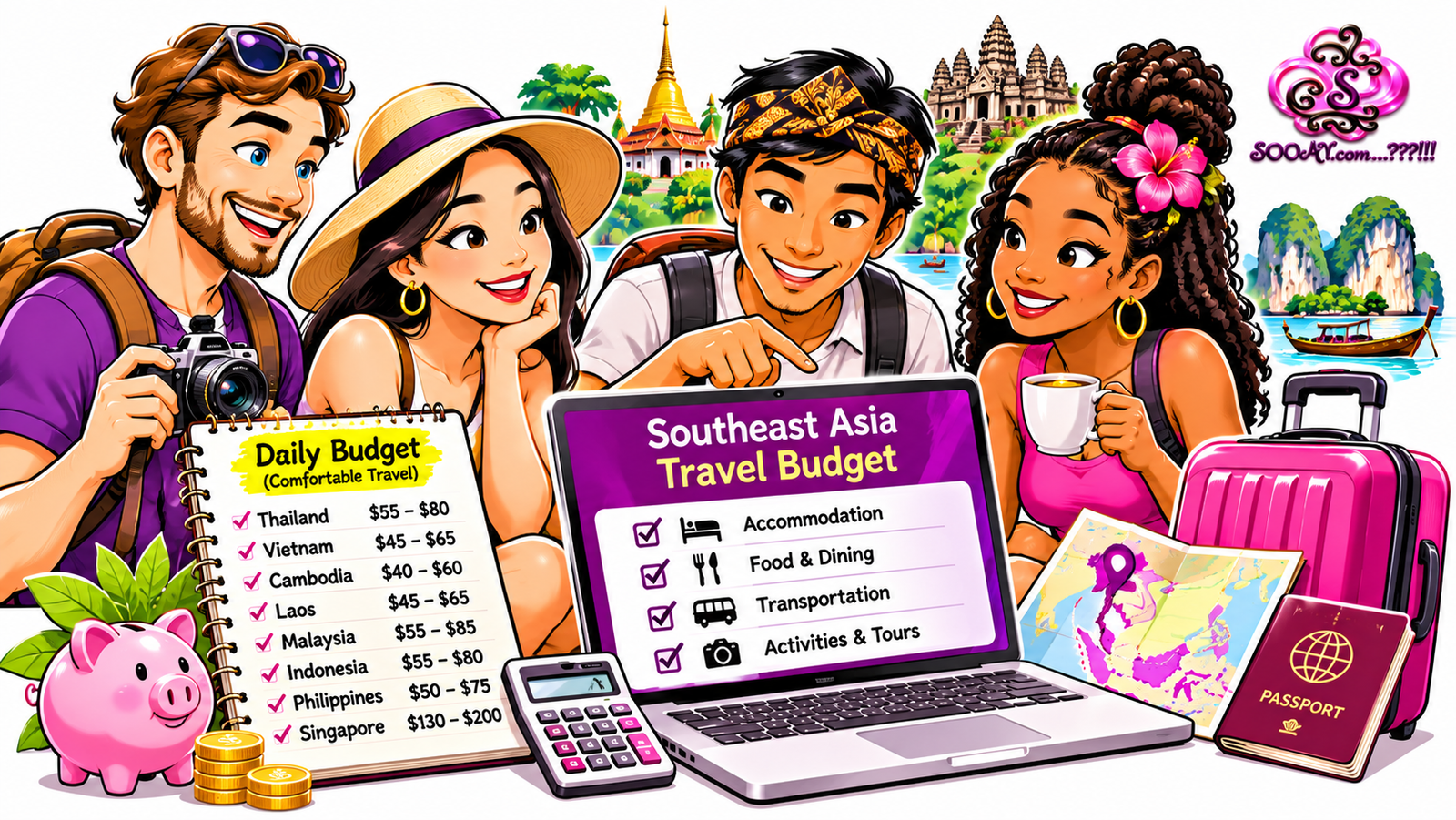
Southeast Asia is one of the most interesting regions in the world for international travelers. From Thailand’s mountain towns and Vietnam’s coastal cities to Indonesia’s tropical islands and Malaysia’s modern urban centers, the region offers an incredible variety of travel experiences.
One of the biggest advantages is that you don’t necessarily need a large budget to enjoy a comfortable trip. Private hotel rooms, good restaurants, convenient transportation, and memorable activities can often be enjoyed for considerably less than in many Western countries.
However, travel costs vary significantly depending on where you go, how long you stay, and the type of accommodation and experiences you prefer.
At SOOAY, we believe travelers should understand their expenses before departure. This guide explains how much it can cost to travel comfortably through Southeast Asia, including accommodation, food, transportation, entertainment, and everyday expenses.
Whether you’re planning two weeks abroad, one month in a single country, or several months exploring the region, understanding your potential costs can help you make better travel decisions.
What Does Comfortable Travel Mean?
Comfortable travel falls somewhere between backpacking and luxury tourism.
You don’t need five-star hotels or expensive restaurants every day, but you also don’t want to spend your entire vacation looking for the cheapest possible room or transportation option.
For many travelers, comfortable travel means:
- Staying in clean, private hotel rooms or comfortable apartments.
- Having air conditioning and reliable internet access.
- Eating at local restaurants, cafés, and occasional higher-end establishments.
- Using convenient transportation when necessary.
- Enjoying sightseeing, tours, and recreational activities.
- Having enough money available for unexpected expenses.
- Being able to enjoy a destination without constantly worrying about every purchase.
Your definition of comfort may be different from someone else’s. The important thing is building a budget around your personal preferences rather than following someone else’s spending habits.
How Much Money Do You Need Per Day?
A comfortable mid-range travel budget in Southeast Asia can vary considerably between countries.
For general planning purposes, many travelers can begin with approximately $45 to $85 per day in several mainland Southeast Asian destinations, depending on accommodation standards and activities.
Singapore is a notable exception because accommodation, restaurants, and transportation can be substantially more expensive.
The following estimates provide a starting point for planning.
Thailand
Thailand offers a wide variety of accommodation and travel experiences, from affordable guesthouses in northern Thailand to beachfront resorts in popular island destinations.
A comfortable mid-range budget can be approximately $55 to $80 per person per day.
This may cover:
- A comfortable hotel or guesthouse.
- Meals at local restaurants and cafés.
- Local transportation and occasional taxi rides.
- Temple visits, markets, sightseeing, and selected activities.
Bangkok, Phuket, Koh Samui, and popular beach destinations can cost more than Chiang Mai, Chiang Rai, and smaller northern Thai towns.
Travelers who spend several weeks in Thailand may find better accommodation value by comparing monthly hotel and apartment rates.
Vietnam
Vietnam is an attractive destination for travelers looking for comfortable accommodation, excellent food, and interesting destinations at relatively affordable prices.
A comfortable mid-range budget can be approximately $45 to $65 per person per day.
Typical expenses include:
- Private hotel rooms or comfortable homestays.
- Meals at local restaurants and cafés.
- Local transportation and occasional ride-hailing services.
- Admission fees, sightseeing, and selected tours.
Hanoi, Da Nang, Hue, and smaller coastal destinations offer different accommodation choices and price levels.
Travelers who stay longer may find that monthly accommodation arrangements provide better value than booking individual hotel nights.
Cambodia
Cambodia can be an affordable destination for travelers interested in history, culture, food, and smaller cities.
A comfortable mid-range budget can be approximately $40 to $60 per person per day.
Expenses may include:
- Private hotel accommodation.
- Local meals and restaurant dining.
- Tuk-tuks and other local transportation.
- Museums, cultural attractions, and sightseeing.
Phnom Penh, Siem Reap, and Kampot offer different travel experiences. Special attractions, particularly visits to Angkor, should be budgeted separately because entrance passes and organized excursions can increase daily spending.
Laos
Laos offers mountain scenery, riverside towns, waterfalls, and a slower pace of travel.
A comfortable mid-range budget can be approximately $45 to $65 per person per day.
Travelers should consider:
- Private guesthouses and comfortable hotels.
- Meals at local restaurants and cafés.
- Local transportation and intercity travel.
- Waterfalls, cultural attractions, and sightseeing.
Luang Prabang, Vientiane, and Vang Vieng offer different accommodation and activity options.
Transportation connections can sometimes be less frequent than in neighboring countries, so allow additional money and time for longer journeys.
Malaysia
Malaysia offers modern cities, comfortable hotels, convenient transportation, and a variety of cultural and natural attractions.
A comfortable mid-range budget can be approximately $55 to $85 per person per day.
Typical expenses include:
- Comfortable hotels or serviced apartments.
- Meals at local restaurants and food courts.
- Public transportation and occasional ride-hailing services.
- Museums, attractions, and sightseeing.
Kuala Lumpur, Penang, Ipoh, and Malacca provide different experiences.
Malaysia can be particularly convenient for travelers who appreciate modern infrastructure and a combination of urban and cultural experiences.
Indonesia
Indonesia offers a tremendous variety of destinations, from Bali and Java to Lombok and the country’s many other islands.
A comfortable mid-range budget in Bali can be approximately $55 to $80 per person per day.
Expenses may include:
- Comfortable hotels, guesthouses, or private villas.
- Meals at local restaurants and cafés.
- Local transportation and scooter rentals where appropriate.
- Beach activities, sightseeing, and organized excursions.
Prices vary considerably between popular tourist areas and less-visited destinations.
Bali’s popular areas can be considerably more expensive than smaller towns and destinations elsewhere in Indonesia.
Remember to account for transportation between islands, domestic flights, and ferry connections when planning a multi-destination trip.
Philippines
The Philippines offers beautiful beaches, islands, diving destinations, and a wide variety of cultural experiences.
A comfortable mid-range budget can be approximately $50 to $75 per person per day.
Expenses may include:
- Private hotel rooms or comfortable resorts.
- Meals at local restaurants.
- Local transportation.
- Island excursions, boat trips, and sightseeing.
Manila, Cebu, Palawan, Boracay, and Siargao have different accommodation and transportation costs.
One important consideration is the expense of moving between islands. Domestic flights, ferries, boat transfers, and additional accommodation nights can significantly increase your total budget.
Singapore
Singapore is considerably more expensive than most other Southeast Asian destinations.
A comfortable mid-range budget can be approximately $130 to $200 per person per day.
Major expenses include:
- Hotel accommodation.
- Restaurant meals and dining.
- Public transportation and occasional taxis.
- Attractions, entertainment, and sightseeing.
Singapore can be an excellent destination for a shorter visit, but travelers planning an extended regional trip should account for its higher accommodation and everyday expenses.
How Much Does a Two-Week Trip Cost?
A two-week trip can provide enough time to explore one country or visit several destinations without rushing through the entire region.
For a comfortable mid-range traveler, a starting budget of approximately $630 to $1,190 for 14 days may be reasonable across destinations where daily costs fall within the $45 to $85 range.
This estimate covers accommodation, meals, local transportation, and a modest allowance for activities.
Your actual expenses will depend on the countries you visit and the type of trip you plan.
Example: Two Weeks in Thailand
A traveler spending 14 days in Thailand with an estimated daily budget of $55 to $80 could expect the following:
- Accommodation, food, local transportation, and activities: approximately $770 to $1,120.
This does not include international airfare, travel insurance, major shopping purchases, or expensive excursions.
Example: Two Weeks in Vietnam
A traveler spending 14 days in Vietnam with an estimated daily budget of $45 to $65 could expect:
- Accommodation, food, local transportation, and activities: approximately $630 to $910.
Vietnam can provide excellent value for travelers who enjoy local restaurants, comfortable hotels, and exploring destinations by train or bus.
How Much Does One Month in Southeast Asia Cost?
A month-long trip provides more opportunities to experience local life and spend time in destinations beyond the major tourist attractions.
For comfortable mid-range travel, a general planning range of approximately $1,350 to $2,550 per person for 30 days can be a useful starting point in destinations where daily costs fall between $45 and $85.
This estimate excludes international flights, visas, insurance, and major intercity or international transportation expenses.
One Month in Thailand
Thailand offers opportunities to combine city experiences, northern mountain destinations, and coastal locations.
Your budget will depend on whether you stay in Bangkok, Chiang Mai, Phuket, or several different destinations.
Longer accommodation arrangements may provide better value than constantly changing hotels.
One Month in Vietnam
Vietnam is well suited to travelers interested in longer stays and exploring different regions.
You could divide your time between Hanoi, central Vietnam, and Ho Chi Minh City.
Using trains, buses, and occasional flights can help you manage transportation expenses while experiencing more of the country.
One Month Across Multiple Countries
Traveling through Thailand, Laos, Vietnam, and Cambodia can create a rewarding extended journey.
However, moving between countries introduces additional expenses, including:
- International transportation.
- Visa and entry fees where applicable.
- Airport transfers.
- Additional accommodation nights.
- Travel between border crossings and major cities.
A slower itinerary with fewer international transfers may provide better overall value.
Understanding Your Biggest Travel Expenses
Your total travel budget is determined by several major expense categories.
Understanding these costs will help you create a more realistic financial plan.
1. Accommodation
Accommodation is often one of the largest expenses during an extended trip.
Your choices may include:
- Budget hotels.
- Guesthouses.
- Boutique hotels.
- Serviced apartments.
- Monthly apartment rentals.
- Beach resorts and private villas.
Consider the length of your stay before choosing accommodation.
For a short visit, a hotel may be more convenient. For a month or longer, an apartment may offer additional space and useful facilities.
2. Food and Dining
Food expenses vary depending on where and how you eat.
Local restaurants, food courts, and street-food establishments can provide affordable meals, while international restaurants and upscale dining establishments generally cost more.
A practical approach is to combine local dining with occasional restaurant experiences.
This allows you to enjoy regional food without spending your entire budget on meals.
3. Transportation
Transportation costs include more than flights.
Consider:
- Airport transfers.
- Local buses and trains.
- Ride-hailing services.
- Intercity buses.
- Railway tickets.
- Domestic flights.
- Ferries and boat transfers.
If you plan to visit several countries, transportation can become a substantial part of your total expenses.
4. Activities and Entertainment
Sightseeing, cultural attractions, tours, museums, beaches, and recreational activities can add up quickly.
You don’t need to book expensive excursions every day.
Mix free or inexpensive activities with selected experiences that are important to you.
5. Communication and Internet
Staying connected is important when traveling internationally.
Include the cost of local SIM cards, eSIM plans, mobile data, and other communication services.
Research available options before departure and compare coverage, data allowances, and validity periods.
6. Travel Insurance
Travel insurance should be considered when preparing your international travel budget.
Compare medical coverage, emergency assistance, trip interruption benefits, exclusions, and coverage limits.
The cheapest policy is not necessarily the most appropriate for your trip.
Hidden Expenses Travelers Often Forget
Some travel expenses are easy to overlook when calculating a daily budget.
These costs may not occur every day, but they can significantly affect your overall spending.
Consider allowing money for:
- Visa applications and entry fees.
- International and domestic airport transfers.
- ATM withdrawal and foreign transaction fees.
- Hotel deposits and additional charges.
- Laundry and personal services.
- Prescription medications and basic supplies.
- Travel insurance.
- Additional baggage fees.
- Unexpected transportation changes.
- Emergency accommodation.
If you’re traveling for several months, these expenses become especially important.
How to Reduce Travel Costs Without Sacrificing Comfort
You don’t have to eliminate enjoyable experiences to make your travel budget go further.
The following strategies can help you reduce unnecessary expenses.
Stay Longer in Each Destination
Constantly changing hotels and traveling between cities can increase transportation and accommodation expenses.
Spending more time in fewer destinations can help reduce these costs.
Compare Monthly Accommodation Rates
If you’re staying for several weeks, ask hotels and serviced apartments whether they offer weekly or monthly discounts.
Compare the complete cost, including utilities, cleaning, internet, and deposits.
Choose Convenient Locations
A hotel close to restaurants, markets, and public transportation can reduce daily transportation expenses.
Convenience can be worth paying a little more for.
Use Local Transportation
Public transportation can provide significant savings compared with using private taxis for every journey.
Learn which transportation options are available in your destination.
Travel Outside Peak Periods
Accommodation prices may be more competitive during quieter travel periods.
However, consider regional weather conditions and possible transportation disruptions before booking.
Combine Local Food With Restaurant Dining
Enjoying local restaurants and markets can help control food expenses while providing a more authentic experience.
Save higher-priced restaurants for occasions when you particularly want them.
Should You Travel on a Daily or Monthly Budget?
Both approaches can work, but they serve different purposes.
A daily budget is useful when traveling between destinations because it helps you monitor spending while moving around.
A monthly budget is often more useful when staying in one location for an extended period.
Daily Budget Planning
A daily budget helps you estimate expenses for:
- Hotel accommodation.
- Meals and drinks.
- Local transportation.
- Activities and entertainment.
- Small everyday purchases.
It is particularly useful for shorter vacations and multi-country itineraries.
Monthly Budget Planning
A monthly budget should account for:
- Long-term accommodation.
- Food and groceries.
- Internet and mobile services.
- Transportation.
- Laundry and personal expenses.
- Entertainment and activities.
- Insurance and emergency reserves.
Monthly planning is especially useful for retirees, remote workers, long-term travelers, and people considering an extended stay abroad.
How to Create Your Own Southeast Asia Travel Budget
Before booking your trip, follow these steps to create a realistic estimate.
Step 1: Choose Your Destinations
Decide which countries and cities you want to visit.
Research their accommodation prices, transportation options, and typical daily expenses.
Step 2: Decide How Long You Will Stay
Calculate the number of days you expect to spend in each destination.
Remember that moving between countries can create additional transportation and accommodation costs.
Step 3: Choose Your Accommodation Standard
Decide whether you prefer budget hotels, boutique properties, serviced apartments, or higher-end accommodation.
Use actual hotel listings for your travel dates rather than relying entirely on regional averages.
Step 4: Estimate Food and Transportation
Research local restaurant prices and transportation options.
Allow additional money for occasional taxis, organized tours, and longer journeys.
Step 5: Add Additional Expenses
Include insurance, visas, mobile data, baggage fees, and other expenses that may not be included in your daily estimate.
Step 6: Create an Emergency Reserve
Keep additional funds available for unexpected expenses and changes to your travel plans.
Avoid spending your entire available budget before your trip begins.
Frequently Asked Questions About Southeast Asia Travel Costs
How much money do I need to travel Southeast Asia comfortably?
The amount depends on your destinations, accommodation preferences, and travel style. As a starting point, approximately $45 to $85 per day can provide a comfortable mid-range budget in several Southeast Asian countries. Singapore generally requires a higher budget.
Is $1,500 enough for one month in Southeast Asia?
It can be enough for a carefully planned month in some destinations, particularly Vietnam, Cambodia, or parts of Thailand and Laos. However, accommodation standards, transportation, activities, and personal spending will determine whether this amount is sufficient.
Which Southeast Asian country is cheapest for comfortable travel?
Vietnam, Cambodia, and Laos can offer relatively affordable accommodation, food, and transportation. However, prices vary between cities and tourist destinations. Compare actual accommodation and transportation costs before choosing.
Is Thailand more expensive than Vietnam?
Thailand can be more expensive than Vietnam in several popular tourist destinations, particularly the southern islands. However, northern Thailand can offer excellent value. The overall difference depends on where you stay and how you travel.
How much should I budget for a two-week Southeast Asia vacation?
A comfortable mid-range traveler might begin with approximately $630 to $1,190 for 14 days of accommodation, meals, local transportation, and modest activities in several mainland destinations. International flights, visas, insurance, and additional transportation should be budgeted separately.
Is it cheaper to stay in one country for a month?
Often, yes. Staying longer in one country can reduce transportation expenses and provide opportunities to negotiate longer accommodation rates. It also gives you more time to explore destinations without rushing.
Does Southeast Asia offer good value for retirees?
Several Southeast Asian destinations offer affordable accommodation, restaurants, and everyday services. However, retirees should also consider healthcare access, medical insurance, visa requirements, transportation, and long-term housing before deciding where to stay.
Travel Comfortably and Make Your Money Go Further
Southeast Asia offers many opportunities for travelers who want comfortable accommodation, good food, interesting destinations, and memorable experiences without spending a fortune.
The key is understanding the differences between countries, planning your accommodation carefully, and allowing enough money for transportation, activities, and unexpected expenses.
Whether you’re planning a two-week vacation, a month-long adventure, or an extended stay abroad, creating a realistic budget can help you enjoy more of your journey with fewer financial surprises.
Take your time, compare your options, and choose destinations that match your lifestyle and budget.
Travel farther. Stay longer. Discover more.