
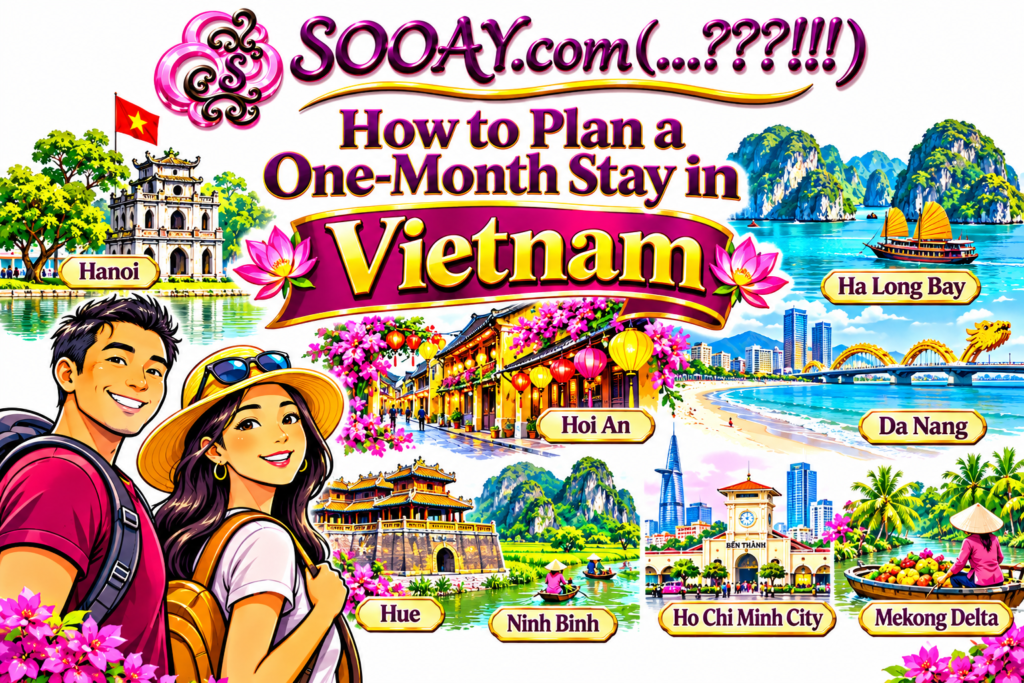
Vietnam is one of Southeast Asia’s most rewarding destinations for travelers who want to slow down, experience local culture, and explore more than just the main tourist attractions. From the mountains of the north to the beaches of the central coast and the waterways of the Mekong Delta, the country offers an incredible variety of experiences.
Spending one month in Vietnam gives you something that a typical vacation cannot: time.
Instead of changing hotels every two or three days, you can settle into comfortable neighborhoods, discover local restaurants, visit traditional markets, take scenic train journeys, and experience everyday Vietnamese life.
Whether you are traveling independently, working remotely, taking an extended vacation, or considering spending more time in Southeast Asia, a 30-day stay can be an excellent introduction to Vietnam.
The key is planning a realistic itinerary, choosing suitable accommodation, understanding transportation options, and arranging the necessary travel documents before departure.
This guide explains how to organize a comfortable one-month stay in Vietnam, including where to go, how long to stay in each destination, what to budget, and how to make the most of your time.
One Month in Vietnam: At a Glance
Recommended trip length: 30 days
Travel style: Slow travel and cultural exploration
Suggested route: Hanoi → Ninh Binh → Ha Long Bay → Hue → Da Nang → Hoi An → Ho Chi Minh City → Mekong Delta
Best transportation: Trains, domestic flights, buses, and local transportation
Accommodation: Hotels, serviced apartments, and monthly rentals
Estimated comfortable budget: Approximately $1,200–$2,000 per person, excluding international airfare
Best overall approach: Spend several nights in each destination instead of moving every day.
Why Spend a Month in Vietnam?
Vietnam is a long country with significant regional differences in climate, food, culture, and scenery.
A short vacation might allow you to visit one or two cities, but a month gives you enough time to experience several regions without constantly rushing.
There are several advantages to spending an extended period in Vietnam.
Experience more destinations. You can explore northern mountains, central coastal towns, major cities, and southern waterways during the same trip.
Reduce transportation stress. Longer stays mean fewer hotel check-ins, fewer transfers, and less time spent traveling between destinations.
Discover local neighborhoods. You can find restaurants, coffee shops, markets, and everyday services beyond the main tourist areas.
Save on accommodation. Some hotels and serviced apartments offer discounted rates for longer bookings.
Enjoy a more comfortable routine. Having a regular place to stay makes it easier to manage laundry, shopping, work, and relaxation.
Vietnam is also a destination where you can adjust your travel style depending on your budget. You can enjoy inexpensive local meals while still choosing comfortable accommodation and convenient transportation.
Where Should You Spend One Month in Vietnam?
For a first visit, I recommend dividing your month between northern, central, and southern Vietnam.
Each region offers something different.
Northern Vietnam: Hanoi, Ninh Binh, and Ha Long Bay
Northern Vietnam is an excellent starting point for your journey.
Hanoi offers historic architecture, traditional neighborhoods, excellent food, museums, and busy markets. Outside the capital, you will find limestone mountains, peaceful countryside, and spectacular coastal scenery.
Hanoi
Hanoi is an excellent introduction to Vietnamese culture.
The Old Quarter is famous for its narrow streets, traditional businesses, street food, and historic buildings.
You can spend several days exploring the city, visiting museums, enjoying Vietnamese coffee, and discovering local restaurants.
Popular attractions include:
– Hoan Kiem Lake.
– The Old Quarter.
– Temple of Literature.
– Ho Chi Minh Mausoleum.
– Train Street, subject to current access restrictions.
– Traditional markets and local food streets.
Allow approximately four nights in Hanoi.
Ninh Binh
Ninh Binh is famous for its limestone mountains, rivers, rice fields, and traditional temples.
Often called Ha Long Bay on land, the region offers some of the most beautiful countryside in Vietnam.
Popular experiences include:
– Boat rides through Trang An.
– Exploring Tam Coc.
– Visiting Bich Dong Pagoda.
– Climbing to the Mua Cave viewpoint.
– Cycling through rural villages.
Allow two or three nights in Ninh Binh.
Ha Long Bay
Ha Long Bay is one of Vietnam’s most recognizable natural attractions.
Its limestone islands and emerald waters make it a popular destination for overnight cruises.
A one-night cruise is a convenient way to experience the bay, although travelers who prefer a quieter experience may want to investigate nearby Lan Ha Bay.
Allow one or two nights for this experience, depending on your preferred cruise.
Central Vietnam: Hue, Da Nang, and Hoi An
Central Vietnam combines historic attractions, beautiful beaches, scenic transportation routes, and comfortable places to stay.
This region is particularly attractive to slow travelers because you can enjoy a relatively relaxed routine while having access to several worthwhile destinations.
Hue
Hue was once the imperial capital of Vietnam and is known for its historic architecture and royal heritage.
The Imperial City is the main attraction, but the surrounding region also offers traditional tombs, pagodas, and riverside scenery.
Allow two nights in Hue.
Da Nang
Da Nang is a modern coastal city with beaches, restaurants, shopping, and convenient transportation connections.
It is particularly attractive to travelers looking for modern apartments and longer stays.
Popular attractions include:
– My Khe Beach.
– Marble Mountains.
– Son Tra Peninsula.
– Dragon Bridge.
– Ba Na Hills.
Allow three or four nights in Da Nang.
Hoi An
Hoi An is one of Vietnam’s most charming destinations.
Its historic Old Town features traditional buildings, colorful lanterns, small shops, riverside restaurants, and a distinctive atmosphere.
You can spend your days exploring the historic center, cycling through nearby villages, visiting An Bang Beach, or enjoying local food.
Hoi An is also an excellent destination for travelers who want to spend several days in one location without feeling pressured to visit attractions constantly.
Allow four or five nights in Hoi An.
Southern Vietnam: Ho Chi Minh City and the Mekong Delta
Southern Vietnam offers a different experience from the north and central regions.
Ho Chi Minh City is a major commercial center with modern shopping malls, traditional markets, museums, restaurants, and lively neighborhoods.
Ho Chi Minh City
Formerly known as Saigon, Ho Chi Minh City is an exciting place to finish your journey.
Some worthwhile attractions include:
– Ben Thanh Market.
– War Remnants Museum.
– Independence Palace.
– Saigon Central Post Office.
– Nguyen Hue Walking Street.
– Chinatown and Binh Tay Market.
Allow three or four nights in the city.
Mekong Delta
The Mekong Delta is known for its rivers, canals, floating markets, fruit orchards, and rural communities.
Popular destinations include Can Tho, Ben Tre, and My Tho.
A guided excursion can help you experience the region’s waterways and agricultural communities.
Allow one or two nights if you want to explore beyond a day trip.
A Practical 30-Day Vietnam Itinerary
Here is a suggested schedule for travelers visiting Vietnam for the first time.
Days 1–5: Hanoi
Arrive in Hanoi and spend your first few days becoming familiar with the city.
Explore the Old Quarter, enjoy traditional Vietnamese food, visit historical attractions, and discover the local coffee culture.
Avoid scheduling too many activities immediately after an international flight.
Days 6–8: Ninh Binh
Travel south to Ninh Binh and enjoy the countryside.
Take a boat trip through Trang An, explore Tam Coc, and visit local temples.
Consider renting a bicycle to explore the surrounding villages.
Days 9–10: Ha Long Bay
Travel toward Ha Long Bay and enjoy an overnight cruise.
Choose a cruise that includes meals, accommodation, and excursions.
Check the itinerary carefully before booking because different cruises visit different parts of the bay.
Days 11–12: Hue
Travel to central Vietnam, preferably by flight or a carefully planned connection.
Explore the Imperial City and enjoy traditional Hue cuisine.
Days 13–17: Da Nang
Spend five days enjoying the coastal environment.
Visit My Khe Beach, explore Marble Mountains, and take time to enjoy restaurants and cafes.
Use Da Nang as a comfortable base for exploring the surrounding area.
Days 18–22: Hoi An
Move to Hoi An and enjoy its historic atmosphere.
Explore the Old Town, visit nearby beaches, enjoy local food, and discover the surrounding countryside.
This is an excellent place to slow down and enjoy a regular daily routine.
Days 23–27: Ho Chi Minh City
Fly to Ho Chi Minh City and spend several days exploring southern Vietnam’s largest city.
Visit museums, markets, restaurants, and historic attractions.
Consider a day trip to the Cu Chi Tunnels if you are interested in learning about the country’s modern history.
Days 28–30: Mekong Delta
Finish your trip with a visit to the Mekong Delta.
Explore local waterways, fruit orchards, and traditional communities.
Return to Ho Chi Minh City for your international departure, allowing sufficient time for transportation and unexpected delays.
How Much Does One Month in Vietnam Cost?
Vietnam can be an affordable destination, but your actual expenses will depend heavily on accommodation, transportation, dining habits, and activities.
For a comfortable month-long stay, it is important to budget for more than inexpensive street food and basic guesthouses.
You may want a private room, reliable internet, air conditioning, convenient transportation, and occasional guided excursions.
The following figures are approximate planning estimates in US dollars for one person.
Estimated monthly expenses:
| Expense | Budget | Comfortable |
|—|—:|—:|
| Accommodation | $350–$500 | $550–$850 |
| Food and drinks | $180–$250 | $250–$400 |
| Transportation | $80–$130 | $150–$250 |
| Attractions and activities | $80–$120 | $120–$200 |
| Mobile data and internet | $10–$25 | $15–$35 |
| Miscellaneous | $75–$125 | $100–$200 |
| **Total** | **$775–$1,150** | **$1,185–$1,935** |
These are illustrative budgets, not guaranteed current prices. International airfare, travel insurance, visa fees, major shopping, and expensive cruises are not included.
Traveling during popular holiday periods, booking private tours, or choosing upscale accommodation can increase the total.
Ways to save money during a month in Vietnam:
– Stay in one neighborhood for several nights instead of constantly changing hotels.
– Ask hotels about weekly and monthly discounts.
– Eat at reputable local restaurants.
– Use ride-hailing services when convenient.
– Compare domestic flights with train and bus options.
– Avoid booking every excursion through your hotel.
– Check whether electricity and other utilities are included in apartment rental prices.
Hotels or Monthly Apartments: Which Is Better?
One of the biggest decisions when planning a month in Vietnam is choosing where to stay.
Hotels and apartments each have advantages.
Hotels
Hotels are convenient because they usually provide housekeeping, reception services, and assistance with transportation.
Advantages include:
– No long-term rental commitment.
– Regular housekeeping.
– Easy check-in and check-out.
– Convenient access to restaurants and attractions.
– Less responsibility for utilities and maintenance.
Hotels are particularly suitable if you plan to move between several destinations.
Serviced apartments
Serviced apartments can be an excellent option if you want more space and a comfortable home-like environment.
Many offer kitchens, refrigerators, washing machines, workspaces, and regular cleaning services.
Advantages include:
– More living space.
– Kitchen facilities.
– Better options for laundry.
– Potentially lower costs for longer stays.
– A more residential experience.
Before booking, confirm whether electricity, water, internet, cleaning, and other fees are included.
My recommendation
For a first one-month trip, consider a combination of hotels and serviced apartments.
Use hotels for shorter stops such as Ninh Binh, Ha Long Bay, and Hue.
Consider a serviced apartment for longer stays in Da Nang, Hoi An, or Ho Chi Minh City.
Compare accommodation options through Agoda and Booking.com.
How to Get Around Vietnam
Vietnam has several transportation options that make a month-long journey relatively easy to organize.
Domestic Flights
Flying is often the most convenient option for longer distances.
For example, traveling between Hanoi and Ho Chi Minh City by train can take approximately 30–36 hours depending on the service.
A domestic flight can reduce that journey to approximately two hours in the air.
Popular airlines include:
– Vietnam Airlines.
– Vietjet Air.
– Bamboo Airways, where services are available.
Compare baggage allowances, departure airports, and total ticket costs before booking.
Trains
Vietnam’s railway system provides a scenic way to explore the country.
The Reunification Railway connects Hanoi and Ho Chi Minh City, with stops at several important destinations.
Popular routes include:
– Hanoi to Hue.
– Hue to Da Nang.
– Da Nang to Nha Trang.
– Nha Trang to Ho Chi Minh City.
The Da Nang to Hue journey is particularly attractive because it passes through the scenic Hai Van Pass.
For a more comfortable experience, consider soft seats or four-berth sleeper cabins.
Check schedules and reservations through Vietnam Railways.
Buses and Limousine Vans
Buses are useful for shorter regional journeys.
They are commonly used between destinations such as:
– Hanoi and Ninh Binh.
– Da Nang and Hoi An.
– Hue and Da Nang.
– Ho Chi Minh City and the Mekong Delta.
Some tourist services offer reclining seats or sleeper accommodations.
For online reservations, compare options through 12Go and Vexere.
Local Transportation
Within larger cities, taxis and ride-hailing services are convenient options.
Grab is widely used in major Vietnamese destinations and can make transportation easier for international visitors.
You can also use local buses, walking routes, and bicycles depending on your location.
Motorbike rentals are available, but visitors should understand Vietnamese licensing requirements, insurance restrictions, traffic conditions, and local laws before riding.
Understanding Vietnam’s Visa Requirements
Visa preparation is one of the most important parts of planning a one-month stay.
Vietnam offers electronic visas for eligible travelers, with a maximum validity of 90 days. Depending on the visa issued, it may allow single or multiple entries.
A 30-day visit generally fits within this validity period, but you must make sure your approved visa covers your actual arrival and departure dates.
Before applying:
– Check the visa requirements for your nationality.
– Confirm whether you qualify for visa exemption or need an e-visa.
– Select the correct entry and exit dates.
– Choose single or multiple entry according to your travel plans.
– Check that your intended border crossing is permitted.
– Verify that your passport information is accurate.
Apply through the official Vietnamese immigration portal:
Vietnam Official E-Visa Website
Do not rely on unofficial websites that imitate government immigration services.
Travelers should also carry a copy of their approved visa and confirm any passport validity and blank-page requirements applicable to their nationality.
For U.S. citizens, the U.S. Department of State advises that Vietnamese e-visas generally cannot be extended or renewed while inside Vietnam. Avoid planning to stay beyond the approved dates.
SIM Cards, eSIMs, and Internet Access
Reliable internet access makes traveling through Vietnam much easier.
You will probably use your phone for maps, hotel reservations, transportation, translation, banking, and communication.
There are two common options.
Physical SIM cards
Local SIM cards can be purchased from authorized mobile providers and their sales outlets.
Major operators include Viettel, Vinaphone, and MobiFone.
eSIMs
An eSIM allows compatible phones to connect to a mobile network without inserting a physical SIM card.
International providers offer Vietnam data packages that can be purchased before departure.
Before purchasing an eSIM, confirm that your phone supports eSIM technology and is unlocked for use with other networks.
For a month-long stay, compare the total data allowance, validity period, coverage, and ability to make calls or send SMS messages.
Best Time to Spend a Month in Vietnam
Vietnam has different weather patterns across its northern, central, and southern regions.
There is no single perfect month for the entire country.
November through February
This period can be a good choice for exploring southern Vietnam and many central destinations.
Northern Vietnam can be cooler, particularly in Hanoi and the mountain regions.
March through April
These months can offer favorable conditions in several parts of Vietnam, although temperatures begin increasing in many destinations.
May through August
Hot weather and seasonal rainfall affect different parts of the country. Central Vietnam can have favorable beach weather during parts of this period, while other regions may experience heavy rain.
September through October
Northern Vietnam can offer beautiful landscapes, while central Vietnam may experience substantial rainfall, storms, and flooding.
Always check regional weather conditions before deciding on your travel dates.
What to Pack for a One-Month Stay
You do not need to pack an entire month’s worth of clothing.
Vietnam has many laundry services, and most travelers can manage comfortably with a smaller collection of clothing.
Essential items include:
– Lightweight shirts and comfortable trousers.
– Walking shoes and sandals.
– Light rain jacket or compact umbrella.
– Sunscreen and sunglasses.
– Travel adapter.
– Personal medications.
– Passport and visa documentation.
– Travel insurance information.
– Debit or credit cards and some cash.
– Phone, charging cables, and power bank.
If you plan to visit northern mountain areas during cooler months, bring a light jacket.
For temple visits, pack clothing that covers your shoulders and knees.
Travel Insurance and Health Preparation
A month abroad is a substantial amount of time, so it is important to consider travel insurance before departure.
Look for a policy that covers:
– Emergency medical treatment.
– Hospitalization.
– Medical evacuation where appropriate.
– Trip interruption.
– Trip cancellation, if desired.
– Lost or delayed baggage.
– Activities included in your itinerary.
Read the exclusions carefully, particularly if you plan to ride motorbikes or participate in adventure activities.
Bring sufficient supplies of any regular prescription medication and keep important medical information accessible.
Travelers should also review recommended vaccinations and health precautions with an appropriate medical professional before departure.
Practical Tips for a Comfortable Month in Vietnam
1. Do not visit too many destinations.
Vietnam is a long country. Trying to visit every major attraction in 30 days can make your trip exhausting.
2. Book accommodation in convenient neighborhoods.
A slightly more expensive hotel near restaurants, shops, and transportation can save time and money.
3. Keep your schedule flexible.
Weather, transportation delays, and unexpected opportunities may require changes to your itinerary.
4. Carry some Vietnamese dong.
Cash remains useful at markets, smaller restaurants, and local businesses.
5. Use translation applications.
Translation tools can make communication easier when ordering food, asking for directions, or arranging transportation.
6. Respect local customs.
Dress appropriately at religious sites, be considerate when taking photographs, and learn a few basic Vietnamese phrases.
7. Check accommodation registration.
Hotels and landlords have responsibilities regarding the registration of foreign guests. Use legitimate accommodation providers and ensure the appropriate registration procedures are followed.
8. Keep copies of important documents.
Store digital copies of your passport, visa, travel insurance, and reservations in a secure location.
Is One Month Enough to Explore Vietnam?
One month is a very good introduction to Vietnam, especially if this is your first visit.
You can experience the major regions, explore historic cities, visit beautiful natural attractions, enjoy coastal destinations, and learn more about Vietnamese culture.
However, Vietnam has considerably more to offer than any single 30-day itinerary can cover.
If you prefer mountain destinations, you could spend more time exploring Sapa, Ha Giang, or Cao Bang.
If you prefer beaches, consider extending your stay in Da Nang, Nha Trang, Quy Nhon, or Phu Quoc.
If you enjoy cultural experiences, spend additional time in Hanoi, Hue, and Hoi An.
The best itinerary is the one that matches your interests rather than the one that includes the most destinations.
Frequently Asked Questions About Spending One Month in Vietnam
Can I stay in Vietnam for one month?
Yes. Many international travelers can visit Vietnam for 30 days using an appropriate visa or visa-exemption arrangement. Requirements depend on nationality, and travelers should confirm their permitted stay before departure.
How much money do I need for one month in Vietnam?
A comfortable traveler might budget approximately $1,200–$2,000 per person for a month, excluding international airfare and travel insurance. Your expenses will depend on accommodation, transportation, dining, and activities.
Is Da Nang a good place for a longer stay?
Yes. Da Nang offers beaches, restaurants, modern apartments, shopping, and convenient access to Hoi An and Hue. It is a particularly attractive destination for travelers who want a comfortable coastal base.
Is it cheaper to stay in hotels or apartments in Vietnam?
Apartments can offer better value for longer stays, especially when monthly discounts are available. Hotels are often more convenient for shorter visits because housekeeping and other services are included.
Can I travel throughout Vietnam by train?
Vietnam’s railway system connects many important destinations, including Hanoi, Hue, Da Nang, Nha Trang, and Ho Chi Minh City. However, some attractions require additional transportation, and domestic flights can save considerable time.
What is the best city for a one-month stay in Vietnam?
Da Nang is a strong choice for travelers who want beaches, modern accommodation, and access to nearby destinations. Hanoi is attractive for culture and history, while Ho Chi Minh City offers a larger metropolitan environment.
Should I book accommodation for the entire month before arriving?
For a first visit, it is sensible to reserve your initial accommodation and the busiest parts of your itinerary. You can leave some flexibility for later bookings, provided you have a reliable plan for your entire stay.
Is Vietnam suitable for older travelers?
Yes. Vietnam has hotels, serviced apartments, private transportation, restaurants, and organized excursions suitable for different travel preferences. Choosing convenient accommodation and avoiding overly ambitious travel schedules can make a longer visit more comfortable.
Final Thoughts: Enjoy Vietnam One Day at a Time
Spending a month in Vietnam is an opportunity to experience the country beyond its most famous attractions.
You can begin in the historic streets of Hanoi, explore the countryside of Ninh Binh, enjoy the beaches of Da Nang, discover the charm of Hoi An, and finish your journey in the energetic streets of Ho Chi Minh City.
The secret to enjoying a longer stay is not trying to see everything.
Choose destinations that interest you, stay long enough to become comfortable, and leave room for unexpected discoveries.
Enjoy local food, discover neighborhood cafes, take scenic train journeys, and spend time exploring places that are not always included in traditional tour packages.
Vietnam is a country worth experiencing slowly.
For more practical travel guides, scenic journeys, and destination inspiration, visit SOOAY.com.