
Planning to spend a month or longer in another country? One of the first decisions you’ll need to make is where to stay.
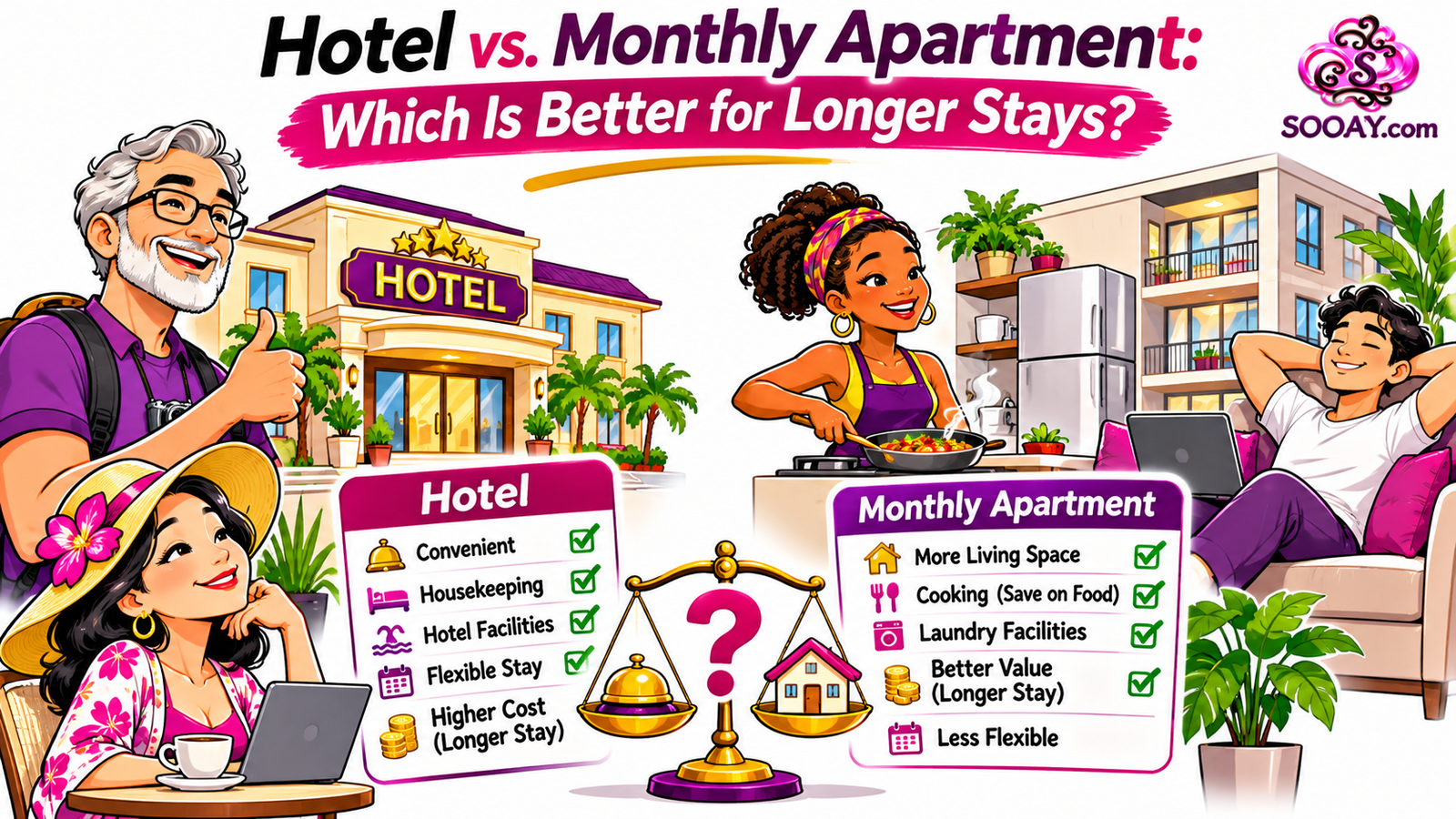
Hotels offer convenience, predictable services, and flexibility. Monthly apartments can provide more living space, a kitchen, laundry facilities, and potentially better value over an extended stay.
But which option is actually better?
The answer depends on how long you plan to stay, your budget, your lifestyle, and how much independence you want. A hotel may be the smarter choice for a two-week visit, while an apartment could make more sense for a three-month stay. In some destinations, a serviced apartment offers a useful middle ground.
This guide compares hotels, monthly apartments, and serviced apartments to help you choose comfortable accommodation without spending more than necessary.
Hotel vs. Monthly Apartment: Understanding the Difference
Before comparing costs, it helps to understand what each accommodation option usually provides.
Hotels
Hotels are designed primarily for temporary stays. They generally provide furnished rooms, regular housekeeping, reception services, and access to facilities such as restaurants, swimming pools, fitness centers, or business areas, depending on the property.
You normally pay by the night, although some hotels offer discounted weekly or monthly rates.
Hotels are convenient because you do not usually need to arrange furniture, household equipment, utilities, or cleaning services yourself.
Monthly Apartments
Monthly apartments are residential units rented for longer periods. They may be furnished or unfurnished and can include studios, one-bedroom apartments, larger units, or entire houses.
Depending on the property and rental agreement, you may have access to:
- A private kitchen or kitchenette.
- A refrigerator and cooking equipment.
- A washing machine or shared laundry facilities.
- Separate living and sleeping areas.
- More storage space.
- A balcony or outdoor area.
Monthly apartments can offer a more residential experience, but tenants may need to arrange utilities, cleaning, deposits, and other responsibilities.
Serviced Apartments
Serviced apartments combine features of hotels and residential rentals.
They are usually furnished and may include housekeeping, reception services, internet, laundry facilities, and other amenities. Some offer kitchens or kitchenettes.
Serviced apartments can be particularly useful for travelers who want more space than a hotel room without taking on all the responsibilities of a traditional rental.
1. Comparing the Cost of Hotels and Monthly Apartments
Cost is often the biggest factor when deciding between a hotel and an apartment.
Hotels typically advertise nightly rates, while apartments are commonly advertised using weekly or monthly rental prices.
Comparing the advertised prices alone can be misleading. You need to calculate the complete cost of staying in each property.
Hotel Expenses
A hotel booking may include:
- The nightly room rate.
- Taxes and service charges.
- Breakfast, if included.
- Internet access.
- Housekeeping.
- Access to available facilities.
Some hotels charge separately for laundry, airport transfers, parking, or other services.
The advantage is that many everyday accommodation services are included in the booking price.
Monthly Apartment Expenses
An apartment may have a lower advertised monthly rental price, but additional expenses can include:
- Monthly rent.
- Electricity and water.
- Internet service.
- Cleaning fees.
- Security deposit.
- Building or maintenance charges, where applicable.
- Household supplies and other necessities.
Some apartments include utilities and internet in the rent, while others charge separately.
Always ask for a breakdown of the expected expenses before agreeing to a rental.
Compare the Total Cost, Not Just the Room Rate
Imagine you are planning a two-month stay.
A hotel may appear more expensive when you multiply its nightly rate by the number of nights. However, the hotel price might include housekeeping, internet, and other services.
An apartment may have a lower monthly rental price, but you could need to pay for utilities, cleaning, transportation, and a deposit.
The best comparison is the total amount you expect to spend during the entire stay.
2. Convenience: Hotels Usually Require Less Planning
One of the biggest advantages of hotels is convenience.
You can usually book a room online, arrive, check in, and begin enjoying your stay without arranging household services or purchasing basic supplies.
If something goes wrong, you can normally contact reception or the property management team.
Hotels may also provide:
- Regular housekeeping.
- Fresh towels and bed linens.
- Front desk assistance.
- Maintenance support.
- Restaurants or breakfast services.
- Luggage storage.
These services can be especially valuable when traveling internationally, particularly if you are unfamiliar with the local language or rental market.
Apartments generally require more preparation. You may need to coordinate check-in with an owner or property manager, understand utility arrangements, and purchase basic household items.
Better choice for convenience: Hotels and serviced apartments.
3. Space and Comfort: Apartments Often Have the Advantage
Hotel rooms are designed to provide temporary accommodation. Even comfortable rooms may have limited storage, a small work area, and little separation between sleeping and living spaces.
Apartments often provide more room to spread out.
Depending on the property, you may have:
- A separate bedroom.
- A living room.
- A dining area.
- A full kitchen.
- More closet and storage space.
- A balcony or outdoor seating area.
This additional space can make a noticeable difference when staying somewhere for several weeks or months.
Instead of living out of a suitcase, you can unpack, organize your belongings, prepare meals, and establish a daily routine.
Better choice for living space: Monthly apartments.
4. Cooking and Food: Apartments Can Help You Control Expenses
Eating at restaurants every day can become expensive, even in destinations known for affordable food.
Hotels may offer breakfast or on-site restaurants, but most standard hotel rooms do not have full kitchens.
Apartments with cooking facilities give you more control over meals.
You can:
- Prepare breakfast before starting the day.
- Store drinks and groceries in a refrigerator.
- Prepare simple lunches and dinners.
- Buy food at local markets and supermarkets.
- Eat at home when you do not feel like going out.
Cooking does not mean you need to prepare every meal. You can combine home cooking with local restaurants, street food, and occasional dining experiences.
However, not every apartment has a full kitchen. Some provide only a small refrigerator, microwave, or basic kitchenette.
Check the actual kitchen equipment before booking if cooking is important to you.
Better choice for self-catering: Apartments with suitable kitchen facilities.
5. Laundry and Everyday Living
Laundry is another practical consideration during an extended stay.
Hotel laundry services can be convenient, but charges may add up if you need to wash clothes frequently.
Some hotels have self-service laundry facilities, while others require guests to use paid laundry services outside the property.
Apartments may provide:
- A private washing machine.
- Shared laundry facilities.
- Space to dry clothes.
- Storage for laundry supplies.
Having access to a washing machine can make longer stays easier, especially if you are traveling with limited luggage.
Before booking, confirm whether laundry facilities are actually available and whether they are included in the accommodation price.
Better choice for regular laundry: Apartments with private or convenient shared laundry facilities.
6. Flexibility: Hotels Are Often Easier to Change
Travel plans can change.
You might decide to leave a destination earlier, extend your stay, or move to another neighborhood.
Hotels generally offer more flexibility because bookings are commonly made by the night. However, cancellation policies, nonrefundable rates, and minimum-stay conditions still apply.
Monthly apartments may require a fixed rental period and advance notice before leaving.
Depending on the agreement, ending a rental early could mean losing part or all of your security deposit or remaining responsible for additional rent.
Before signing an apartment agreement, understand:
- The minimum rental period.
- The required notice before moving out.
- The conditions for extending the rental.
- Whether early termination is permitted.
- How and when the deposit is returned.
Better choice for changing travel plans: Hotels with flexible booking and cancellation conditions.
7. Privacy and Lifestyle
Hotels and apartments can provide different experiences.
Hotels may have busy lobbies, shared elevators, restaurants, housekeeping activity, and other guests moving throughout the property.
Some travelers enjoy this environment because it provides opportunities to meet people and access services.
Apartments can feel more private and residential. You may have your own entrance, kitchen, living area, and daily routine.
However, apartments are not automatically quieter. Noise from neighbors, traffic, construction, or nearby businesses can affect your experience.
If privacy and quiet are important, investigate the actual building and surrounding neighborhood rather than relying only on photographs.
Better choice for a residential lifestyle: A suitable private apartment.
8. Safety and Property Management
Safety should be part of your accommodation decision, regardless of whether you choose a hotel or apartment.
Hotels commonly have reception areas, established check-in procedures, and staff available to assist guests. The level of security varies between properties.
Apartments can also be secure, particularly in professionally managed buildings with controlled access and appropriate security arrangements.
Before booking either type of accommodation, consider:
- Whether the property has secure entry.
- Whether the neighborhood is suitable for your needs.
- Whether there is reliable property management.
- Whether emergency contacts are available.
- Whether windows, doors, and locks are in good condition.
- Whether the property has working smoke alarms and appropriate fire-safety arrangements.
For apartments, make sure you know who to contact if you have a maintenance problem or need assistance outside normal business hours.
9. Which Option Is Better for Different Lengths of Stay?
The length of your trip can help determine which accommodation option makes the most sense.
Stays of One to Seven Nights
Hotels are usually the most practical choice for short visits.
You avoid rental agreements, deposits, utility arrangements, and the need to set up a temporary household.
A hotel also makes it easier to move between destinations.
Stays of One to Four Weeks
Both hotels and apartments can work well.
Look for hotels offering weekly or extended-stay discounts. Compare these with furnished apartments that allow shorter rental periods.
Serviced apartments may be especially attractive because they offer more living space without requiring a traditional long-term lease.
Stays of One to Three Months
Monthly apartments become increasingly worth considering.
You may benefit from a kitchen, laundry facilities, additional storage, and a more residential environment.
However, compare the complete cost with hotels offering extended-stay rates.
Stays of Three Months or Longer
A monthly apartment or serviced apartment may be a better fit for travelers who want to establish a routine and live more like local residents.
At this stage, property quality, neighborhood convenience, rental terms, and everyday living costs become especially important.
Make sure your rental arrangement and immigration status permit the length of stay you are planning.
10. A Third Option: Serviced Apartments
You do not always have to choose between a standard hotel and a traditional apartment.
Serviced apartments offer a combination of residential space and hotel-style services.
They can be particularly useful for travelers who want:
- A furnished apartment.
- A kitchenette or full kitchen.
- Regular housekeeping options.
- Reception or property management assistance.
- Internet access.
- Flexible weekly or monthly booking arrangements.
The exact services vary considerably, so compare what is included rather than assuming every serviced apartment provides the same facilities.
Some properties are closer to hotels, while others operate more like furnished residential apartments.
Serviced apartments can cost more than basic monthly rentals, but the additional services may be worthwhile for travelers who value convenience.
11. How to Find the Right Accommodation for a Longer Stay
Finding comfortable accommodation requires more than comparing photographs and advertised prices.
Use these steps before making a booking.
Step 1: Choose the Right Neighborhood
Research the neighborhood before selecting a property.
Consider restaurants, supermarkets, public transportation, hospitals, shopping areas, and the distance to places you expect to visit regularly.
For destination-specific advice, read our guide:
Best Neighborhoods for Long-Term Stays in Chiang Mai
Step 2: Compare Several Accommodation Types
Do not compare only hotels with hotels or apartments with apartments.
Look at standard hotels, extended-stay hotels, serviced apartments, furnished studios, and monthly rentals.
You may discover that a serviced apartment offers better overall value than a hotel or traditional rental.
Step 3: Calculate the Complete Cost
Include rent or nightly charges, taxes, utilities, internet, laundry, cleaning, transportation, deposits, and any additional fees.
Compare the total expected expense for the entire stay.
Step 4: Check Recent Reviews
Read recent guest reviews and pay attention to repeated complaints.
Look for comments about:
- Noise and cleanliness.
- Internet reliability.
- Air conditioning.
- Water pressure and hot water.
- Staff responsiveness.
- Maintenance problems.
- Accuracy of photographs and descriptions.
One negative review does not necessarily mean a property is unsuitable, but repeated complaints about the same problem deserve attention.
Step 5: Confirm the Booking and Rental Conditions
Before paying, confirm the total price, cancellation conditions, check-in arrangements, included services, and any additional charges.
For monthly rentals, request a written agreement and make sure you understand the deposit and early-termination conditions.
Step 6: Avoid Paying Unverified Individuals
Use reputable booking platforms or verify that you are dealing with the legitimate property owner or authorized manager.
Be cautious if someone pressures you to send money immediately, refuses to provide a written agreement, or asks you to make an unusual payment outside an established booking process.
Hotel vs. Monthly Apartment: Quick Comparison
- Convenience: Hotels generally offer more services and less setup.
- Living space: Apartments often provide more room.
- Cooking: Apartments are usually better equipped for preparing meals.
- Laundry: Apartments may provide more convenient access to washing facilities.
- Flexibility: Hotels can be easier to change, depending on booking conditions.
- Privacy: Apartments can provide a more residential experience.
- Housekeeping: Hotels generally include regular housekeeping, while apartment arrangements vary.
- Longer stays: Monthly apartments and serviced apartments are worth comparing for extended visits.
There is no universal winner. The best option depends on the complete cost, property quality, services, and length of your stay.
Frequently Asked Questions
Is it cheaper to rent an apartment or stay in a hotel for a month?
A monthly apartment can be less expensive than paying a hotel’s standard nightly rate for an entire month. However, utilities, deposits, cleaning, and other expenses must be included in the comparison. Hotels may also offer discounted extended-stay rates.
Are monthly apartments furnished?
Some are fully furnished, while others are partially furnished or unfurnished. Confirm that the property includes the furniture, appliances, and household equipment you need before signing an agreement.
Do hotels offer monthly rates?
Many hotels offer weekly or monthly discounts, although availability and conditions vary. Contact the property directly or check its extended-stay booking options.
Are serviced apartments better than hotels?
Serviced apartments can provide more living space and kitchen facilities while retaining some hotel-style services. They may be a good compromise for travelers staying several weeks or months.
Should I pay a deposit for a monthly apartment?
Some rental agreements require a security deposit. Before paying, confirm the amount, payment arrangements, refund conditions, and any deductions that may apply. Obtain a written receipt and agreement.
Can I negotiate a monthly hotel or apartment rate?
Some properties offer discounts for longer stays, particularly when you book directly or outside busy travel periods. Ask about extended-stay rates, but compare the complete price and cancellation conditions before accepting an offer.
Is it better to book accommodation before arriving?
For a short visit, booking before arrival is generally practical. For a longer stay, consider reserving temporary accommodation first and inspecting potential monthly rentals in person before making a longer commitment.
Final Verdict: Hotel or Monthly Apartment?
Hotels are an excellent choice for travelers who value convenience, housekeeping, flexible bookings, and a simple arrival experience.
Monthly apartments are often more attractive for people who want additional space, cooking facilities, laundry access, and a residential lifestyle.
Serviced apartments offer a middle ground for travelers who want some of the advantages of both.
If you are planning to stay somewhere for several weeks or months, do not automatically choose the cheapest advertised option. Compare the complete cost, neighborhood, services, rental conditions, and everyday convenience.
The best accommodation is the one that allows you to enjoy your destination comfortably without creating unnecessary expenses or complications.
Travel farther. Stay longer. Discover more.
Read: How to Find Affordable Hotels Without Sacrificing Comfort
Read: How Much Does It Cost to Travel Southeast Asia Comfortably?