
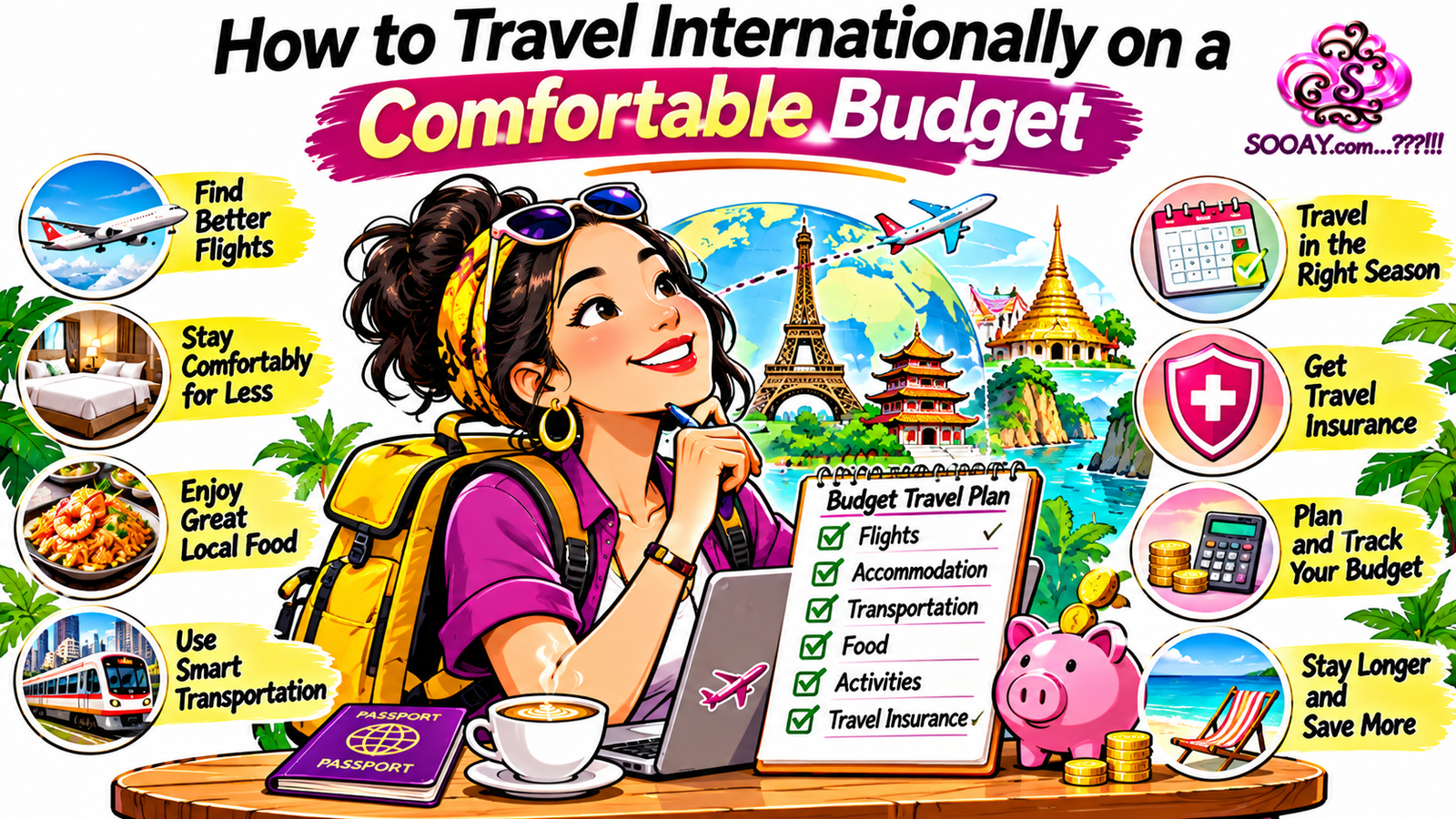
International travel does not have to be expensive, uncomfortable, or limited to short vacations. With the right planning, you can explore different countries, stay in comfortable accommodation, enjoy local food, and experience new destinations without spending more than necessary.
The secret is not always finding the cheapest flight, booking the lowest-priced hotel, or cutting every expense. It is making smarter decisions about where you travel, when you go, where you stay, and how you spend your money.
A comfortable travel budget gives you room to enjoy your trip while avoiding unnecessary expenses. You can choose a convenient hotel instead of the cheapest room, take a taxi when it makes sense, enjoy a restaurant meal, and still manage your overall spending.
Whether you are planning a two-week vacation, a month-long international trip, or several months abroad, this guide explains how to travel comfortably while keeping your expenses under control.
1. Choose a Destination That Matches Your Budget
Your destination has one of the biggest effects on the overall cost of international travel.
Some countries offer relatively affordable accommodation, transportation, restaurants, and everyday services. Others have higher prices for hotels, dining, transportation, and entertainment.
However, the most expensive destinations are not necessarily the best travel experiences, and the cheapest destinations are not automatically the best value.
Look for places where your money provides a good balance of comfort, convenience, safety, and experiences.
Consider Your Everyday Expenses
Before choosing a destination, research the cost of:
- Hotels and furnished apartments.
- Restaurants and local food.
- Public transportation and taxis.
- Groceries and everyday supplies.
- Attractions and activities.
- Mobile data and internet access.
- Healthcare and travel insurance.
A destination with affordable hotels may still become expensive if transportation is inconvenient or restaurants and activities are costly.
Think about your complete travel experience rather than comparing one expense.
Look Beyond the Most Popular Cities
Major cities and famous tourist destinations often attract higher accommodation prices, especially in popular travel seasons.
Consider smaller cities, secondary destinations, and less crowded regions.
You may find comfortable accommodation, interesting local restaurants, cultural attractions, and convenient services at a better overall value.
For example, instead of spending your entire trip in one major city, consider combining a popular destination with a quieter nearby city.
This approach can also give you a more varied travel experience.
Research the Cost of Living Before Booking
Use current accommodation listings, restaurant menus, transportation information, and recent traveler experiences to estimate everyday expenses.
Remember that prices change. Treat online cost estimates as planning guides rather than guaranteed prices.
2. Travel During Less Expensive Seasons
Travel dates can have a major effect on your budget.
Flights and accommodation may become more expensive during school holidays, major festivals, national holidays, and popular tourist seasons.
If your schedule is flexible, consider traveling during shoulder seasons or quieter periods.
Understand the Different Travel Seasons
- Peak season: Popular travel periods when demand is high and accommodation or flights may cost more.
- Shoulder season: Periods between peak and low seasons that may offer a useful balance of weather, availability, and prices.
- Low season: Quieter periods when some destinations offer lower accommodation rates and fewer crowds.
Low season does not always mean better travel conditions. Weather, local holidays, seasonal closures, and transportation schedules can affect your experience.
Research the conditions at your destination before choosing your dates.
Be Flexible With Departure Dates
If possible, compare flights across several departure days.
Flying on a different weekday or adjusting your trip by a few days may produce better options.
Do not focus only on the cheapest ticket. Consider baggage fees, airport locations, departure times, layovers, and arrival transportation.
A slightly more expensive flight may offer better overall value if it saves you time and additional expenses.
3. Find Affordable Flights Without Sacrificing Comfort
International airfare can consume a significant part of your travel budget.
The goal is to find a reasonable fare that also provides a practical journey.
Compare Multiple Booking Options
Use airline websites and reputable online travel agencies to compare available flights.
Check the complete price, including:
- Checked baggage.
- Carry-on baggage allowances.
- Seat selection.
- Payment or booking fees.
- Changes and cancellation conditions.
- Airport transfers and connections.
An inexpensive ticket may become less attractive after additional charges are included.
Consider Alternative Airports
Some cities have multiple airports, and nearby airports may offer different flight options.
However, calculate the cost and time required to reach your final destination.
A lower airfare may not be worthwhile if the airport is far away or requires expensive transportation.
Be Careful With Connecting Flights
Connecting flights can sometimes provide lower fares, but they introduce additional considerations.
Look at the connection time, airport changes, baggage arrangements, and whether the flights are on one ticket or separate bookings.
Separate tickets can create additional risks if the first flight is delayed and you miss the next flight.
For international connections, also check whether you need a transit visa or permission to enter the connecting country.
Use Flight Alerts and Compare Prices
Flight comparison websites and airline fare alerts can help you monitor prices.
Compare the final booking price on the airline’s official website before purchasing.
If you use an online travel agency, understand who handles changes, cancellations, and customer support.
4. Choose Comfortable Accommodation at a Reasonable Price
Accommodation is one of the most important parts of a comfortable international trip.
You do not need to book a luxury resort to enjoy a pleasant stay. A clean, well-maintained hotel in a convenient neighborhood may provide everything you need.
Focus on Location and Convenience
A hotel with a slightly higher nightly rate may save money if it is close to restaurants, public transportation, shopping, and attractions.
Before booking, investigate the surrounding neighborhood.
Consider:
- Distance to public transportation.
- Nearby restaurants and grocery stores.
- Access to pharmacies and healthcare.
- Safety and nighttime surroundings.
- Noise levels and traffic.
- Distance from the airport or train station.
A convenient location can reduce transportation costs and make your stay more enjoyable.
Look Beyond Luxury Hotel Brands
Independent hotels, boutique properties, guesthouses, and well-reviewed serviced apartments can provide excellent value.
Compare recent guest reviews and photographs rather than relying only on star ratings.
Pay particular attention to cleanliness, air conditioning, bathroom condition, internet reliability, and staff responsiveness.
Consider Apartments for Longer Stays
If you plan to remain in one destination for several weeks or months, a furnished apartment may be worth considering.
Apartments can provide a kitchen, laundry facilities, additional storage, and more living space.
However, include utilities, cleaning, deposits, and other rental expenses when comparing the total cost.
For more information, read:
How to Find Affordable Hotels Without Sacrificing Comfort
Hotel vs. Monthly Apartment: Which Is Better for Longer Stays?
5. Use Local Transportation When It Makes Sense
Transportation costs can add up quickly, especially when traveling between airports, hotels, restaurants, attractions, and different cities.
Using local transportation can help control expenses while giving you a better understanding of your destination.
Learn How Local Transportation Works
Depending on the destination, transportation options may include:
- Metro and subway systems.
- Local buses.
- Trains and intercity rail services.
- Songthaews and shared transportation.
- Ride-hailing services.
- Taxis.
- Walking and bicycle rentals.
Research transportation options before arriving so you know how to reach your accommodation.
Stay Near Transportation Connections
A hotel close to a train station or convenient bus route may help reduce transportation expenses.
However, do not assume that staying directly beside a major station is always the best choice. Consider noise, neighborhood conditions, and the actual convenience of the location.
Know When Paying More Makes Sense
Public transportation is not always the most practical option.
A taxi or ride-hailing service may be worthwhile when:
- You arrive late at night.
- You have several pieces of luggage.
- You are traveling with family.
- Public transportation is unavailable.
- Your destination is difficult to reach.
The goal is to use transportation that provides good value, not to avoid every additional expense.
6. Enjoy Local Food Without Overspending
Food is one of the best parts of international travel.
You can enjoy local restaurants, traditional dishes, food markets, and occasional upscale dining without eating at expensive tourist restaurants every day.
Explore Local Restaurants
Restaurants that serve local residents can sometimes offer better value than businesses located directly in major tourist areas.
Explore neighborhood restaurants and food markets to discover authentic local meals.
Look for places that are busy with local customers and appear clean and well maintained.
Mix Restaurant Meals With Simple Meals
If your accommodation has a kitchen or refrigerator, you can prepare some meals yourself.
Consider buying:
- Fresh fruit.
- Breakfast supplies.
- Drinking water.
- Snacks.
- Simple ingredients for easy meals.
You do not need to cook every day. Even preparing breakfast or an occasional dinner can help manage your food budget.
Be Careful With Food Safety
Affordable food should still be prepared and served safely.
Pay attention to food handling, cleanliness, storage, and whether meals are freshly prepared.
Travelers should also consider local drinking-water recommendations and any dietary restrictions.
7. Pack Smart and Avoid Unnecessary Baggage Fees
Packing too much can increase your travel expenses and make moving between destinations more difficult.
Airlines have different baggage rules, so check the allowances for every flight on your itinerary.
Pack for Your Actual Trip
Choose clothing that can be mixed and matched.
Consider the climate, expected activities, cultural requirements, and length of your stay.
Avoid packing items that you can easily and reasonably obtain at your destination.
Consider Laundry Access
For longer trips, access to laundry facilities can reduce the amount of clothing you need to bring.
A hotel with self-service laundry or an apartment with a washing machine may be particularly useful.
Protect Important Items
Keep essential travel documents, medication, valuables, electronics, and important personal items in your carry-on luggage when permitted.
Make sure your baggage meets airline size and weight requirements.
8. Protect Your Trip With Appropriate Travel Insurance
Travel insurance is an important part of planning an international trip.
A low travel budget should not mean leaving yourself exposed to potentially expensive problems.
Depending on the policy, travel insurance may provide coverage for:
- Emergency medical expenses.
- Emergency medical transportation.
- Trip cancellation.
- Trip interruption.
- Travel delays.
- Lost, damaged, or delayed baggage.
Coverage varies significantly between providers and policies.
Before purchasing insurance, read the exclusions, coverage limits, deductibles, claim requirements, and eligibility conditions.
Pay particular attention to pre-existing medical condition rules, adventure activities, and any requirements involving motorcycles or other vehicles.
Do not assume that every policy covers every situation.
If you are planning an extended stay, verify that the policy covers the entire period and the activities you expect to undertake.
9. Manage Your Money and Avoid Unnecessary Banking Fees
International travel can involve currency conversion charges, ATM fees, foreign transaction fees, and other banking expenses.
Understanding how you will access money abroad can help prevent unnecessary costs.
Check Your Bank’s International Fees
Before leaving, review your bank’s policies for:
- International ATM withdrawals.
- Foreign transaction fees.
- Currency conversion.
- Debit card purchases abroad.
- Card replacement and emergency assistance.
Some financial institutions offer travel-friendly accounts or cards, but compare the terms before opening a new account.
Understand Dynamic Currency Conversion
When paying by card abroad, a merchant or ATM may offer to charge you in your home currency instead of the local currency.
This is called dynamic currency conversion.
The exchange rate and additional charges may be less favorable than allowing your card provider to process the transaction in the local currency.
Compare the displayed amount and exchange rate before accepting a conversion offer.
Keep More Than One Payment Option
Consider carrying a backup payment method in case your primary card is lost, blocked, or temporarily unavailable.
Keep backup cards and emergency funds in a separate secure location.
10. Stay Connected Without Paying Excessive Roaming Charges
Mobile connectivity is important when traveling internationally.
You may need internet access for maps, transportation, hotel bookings, banking, translation, and communication.
Depending on your destination, consider:
- Local SIM cards.
- International eSIM plans.
- Travel data packages.
- Hotel and café Wi-Fi.
- Portable Wi-Fi devices.
Compare coverage, data allowances, activation requirements, and prices before purchasing.
Check that your phone supports the SIM or eSIM technology you intend to use.
If you rely on banking apps or two-factor authentication, make sure you can still receive important security codes while abroad.
Keep your primary phone number active when necessary and understand your carrier’s international roaming conditions.
11. Save Money on Attractions and Activities
You do not need to pay for expensive tours and attractions every day to enjoy an international destination.
Many cities offer free or inexpensive activities.
Look for Free Attractions
Depending on the destination, you may be able to enjoy:
- Public parks and gardens.
- Beaches and waterfront areas.
- Walking streets and local markets.
- Historic neighborhoods.
- Temples and cultural sites.
- Scenic viewpoints.
- Free public events and festivals.
Some attractions may require admission fees, donations, or special reservations, so check the rules before visiting.
Choose Tours Carefully
Organized tours can be convenient, particularly when transportation, guides, or special access are involved.
However, compare what is included before booking.
Check group size, transportation, entrance fees, meals, cancellation conditions, and whether the tour includes stops at businesses where visitors are expected to shop.
Balance Paid and Free Experiences
Rather than booking an expensive activity every day, combine paid attractions with free exploration.
You can enjoy a destination without filling every day with organized activities.
12. Plan Longer Stays to Reduce Travel Costs
Moving between destinations frequently can increase transportation, accommodation, and planning expenses.
Staying longer in one place may provide better value.
Reduce Frequent Hotel Changes
Every time you change hotels, you may pay for transportation, additional accommodation nights, baggage storage, or other expenses.
Choosing fewer destinations can simplify your itinerary and give you more time to explore each place.
Ask About Extended-Stay Discounts
Some hotels, serviced apartments, and furnished rentals offer weekly or monthly rates.
Compare the total cost of an extended stay with the cost of booking individual nights.
Always confirm whether utilities, cleaning, internet, and other services are included.
Experience More Than the Tourist Center
Longer stays give you time to explore residential neighborhoods, local markets, quieter attractions, and nearby towns.
You may discover places that are more interesting and better suited to your budget than the busiest tourist areas.
For more ideas, explore our guide:
Slow Travel in Southeast Asia: A Beginner’s Guide
13. Create a Comfortable Travel Budget Before You Leave
A realistic travel budget helps you understand what you can afford and where you have room to spend.
Start by estimating your major expenses.
Calculate Your Main Travel Costs
Include:
- International flights.
- Accommodation.
- Local transportation.
- Food and drinks.
- Activities and attractions.
- Travel insurance.
- Mobile service and internet.
- Visas and travel documentation.
- Emergency funds.
Do not forget expenses that occur before departure, such as travel equipment, luggage, vaccinations when recommended, and document fees.
Separate Essential and Optional Expenses
Essential expenses include accommodation, transportation, food, insurance, and required travel documents.
Optional expenses may include premium tours, entertainment, shopping, upgrades, and additional excursions.
This distinction makes it easier to adjust your plans if your estimated costs exceed your available budget.
Include an Emergency Reserve
Unexpected expenses can occur during international travel.
A delayed flight, medical issue, lost belongings, or unexpected accommodation change can affect your finances.
Keep emergency funds separate from your regular daily spending money.
Review Your Spending During the Trip
Check your expenses regularly rather than waiting until the end of your vacation.
If you spend more than expected on accommodation or transportation, adjust optional expenses before the difference becomes difficult to manage.
14. Common Budget Travel Mistakes to Avoid
Trying to save money without considering the complete travel experience can sometimes create additional expenses.
Avoid these common mistakes.
Booking the Cheapest Accommodation Without Checking the Location
A low-priced hotel far from restaurants, transportation, and attractions may cost more in the long run.
Compare the accommodation price with the transportation expenses and time required to reach the places you want to visit.
Ignoring Additional Airline Fees
Check baggage allowances, seat selection charges, airport transfers, and cancellation conditions before purchasing a ticket.
Planning Too Many Destinations
Moving frequently can increase transportation costs and leave less time to enjoy each location.
Consider slowing down and spending more time in fewer destinations.
Failing to Research Visa Requirements
Entry requirements vary by nationality and destination.
Check official government immigration sources before departure. Verify visa requirements, permitted length of stay, passport validity, and any required arrival documentation.
Do not assume that rules remain unchanged because you visited the country previously.
Choosing Travel Insurance Based Only on Price
The cheapest policy may have limited coverage, exclusions, or unsuitable claim conditions.
Compare benefits and policy details rather than choosing solely on price.
Spending Too Much on Convenience
Airport taxis, hotel restaurants, private tours, and premium services can increase your expenses.
Use them when they provide genuine value, but compare alternatives when practical.
Frequently Asked Questions About Comfortable Budget Travel
Can you travel internationally comfortably on a limited budget?
Yes. Choose destinations that match your finances, compare accommodation options, plan transportation, and prioritize the experiences that matter most to you. Comfortable travel does not require luxury hotels or expensive activities every day.
What is the best way to save money on international travel?
Some of the most effective approaches include traveling during less expensive periods, comparing flights, choosing convenient but reasonably priced accommodation, staying longer in fewer destinations, and using local transportation where practical.
Is it cheaper to travel for a month instead of two weeks?
Not necessarily. A longer trip costs more overall, but the average daily expense may decrease if you secure an extended-stay accommodation rate, reduce transportation between destinations, and avoid repeated travel costs.
Are smaller cities cheaper than major tourist destinations?
They can be, particularly for accommodation and everyday expenses. However, prices vary by country and location. Smaller cities may also have fewer transportation connections or services, so compare the complete cost and convenience.
Should I book flights and hotels separately?
Compare both package bookings and separate reservations. Separate bookings can provide flexibility, but package deals may sometimes offer better value. Review cancellation conditions, baggage rules, and customer support before choosing.
How much emergency money should I bring?
The amount depends on your destination, trip length, insurance coverage, available payment methods, and personal circumstances. Plan for unexpected accommodation, transportation, medical, and travel-related expenses.
Is slow travel a good way to save money?
It can be. Staying longer in fewer destinations may reduce transportation costs, repeated check-in expenses, and other costs associated with frequent movement. It also gives you more time to experience local life.
Final Thoughts: Comfortable Travel Is About Making Better Choices
International travel does not have to be an expensive luxury.
With careful planning, you can choose comfortable accommodation, enjoy local restaurants, explore interesting destinations, and experience different cultures without spending unnecessarily.
The most important step is understanding where your money goes.
Choose destinations that match your budget, compare flights and accommodation, use convenient transportation, protect yourself with appropriate insurance, and leave room for unexpected expenses.
Most importantly, do not confuse budget travel with uncomfortable travel. Saving money should make your trip more sustainable, not turn every day into a series of compromises.
Whether you are planning a short vacation, a month abroad, or a longer international adventure, a comfortable budget can help you travel farther and stay longer.
Travel farther. Stay longer. Discover more.
Explore More Budget & Comfort Travel Guides